
Bone Fractures
About Bone Fractures
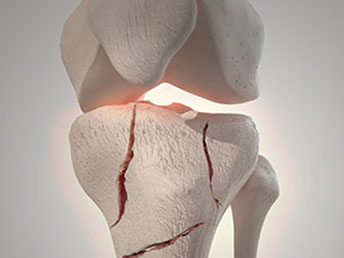
Any break in the continuity of cortex(outer layer in the bone)is called a Fracture.
Any fracture become Minor or Major depending upon the effect of fracture on rest of the body and activities affected
For Example
A fracture of the elbow is a MAJOR injury due to its complexity, need for General Anaesthesia, but the patient is Mobile and he can move around with an arm sling pouch, go around do his day to day activities as is feasible, meet people socialize- it appears minor when we look at it as the patient appear normal except for a bandage over the elbow and Arm pouch
Where as a small bone like Tarsal or Metatarsal fracture in the foot warrants either surgery or a POP cast and non weight bearing for 6 weeks- patient is entirely restricted to his home and cannot walk, bathe, use toilet independently, cannot work, socialize- this appears Major as most of the patients activities are restricted and is dependent for all their day to day activities.
So a query of Major or Minor is perceived more in the context of the location and it’s indirect effect on the body rather than the fracture configuration itself.
Fractures few of them can be treated with POP cast or Orthotics and few need surgery
Human body has an innate ability to heal itself, so any injury/ fracture can heal given enough time and in acceptable alignment.
Surgery is to aid in healing of fractures in anatomical or acceptable position which cannot be achieved by POP cast or rest.
Surgery is aimed at early recovery by early mobilisation, weight bearing by achieving anatomic reduction or alignment of a fracture, which may not be possible with POP or puthuru kattu, bone setters.
On a general note
Fracture involving the Articular surface or fracture around the joints are treated with PLATES. (Recent advances in Nails/rods have been promising in treating these around the joint fractures also)
Fractures away from the joint surface in the middle of the bone are treated using Nails/rods.
There are exceptions like in Arm and Forearm where plating is the commonly executed procedure.
Again, human body has an infinite innate ability to heal, any fracture will heal. As long as the bone heals in anatomical alignment the patient will have good outcome.
In few circumstances in my practice I have encountered people who intially have been treated by a Bone setter and end up with deformed limbs because of inadequate knowledge of the injury and improper assessment which leads to uncorrectable deformities.
Normal is a subjective word.
It varies from person to person and job to job.
Any bone when fractured demands rest to that part for healing and takes approximately 3-6 months to show signs of healing on X ray and reach a near normal pre injury status in 12-18 months. It’s only by training/physiotherapy that you can shorten your period of recovery and back to your normal routine.
No surgery or surgical approach is perfectly safe. They do have complications varying from person to person and disease to disease. just like in the sense of each person’s anatomy different, however minute or major, from the other person.
Surgical complications like- bleeding, wound healing issues, infection, injury to nerves and blood vessels during surgery, muscle injury. But the incidence is very low 0.5-1%. The risk increases with patients having more medical issues, late presentation, intial misdiagnosed and poorly managed and also the pathology in itself like fractures of pelvis, sacrum, joints which carry higher rate of complications when appropriate protocols are not followed.

Address
Metro pillar No.C, 1494, Yousufguda Main Rd., Yella Reddy Guda, Hyderabad.
Call Us
+91 96 52 50 52 52
Website
www.eliteorthoandspine.in